A Space Saving Garden
How to be a plant lover when there's no room!

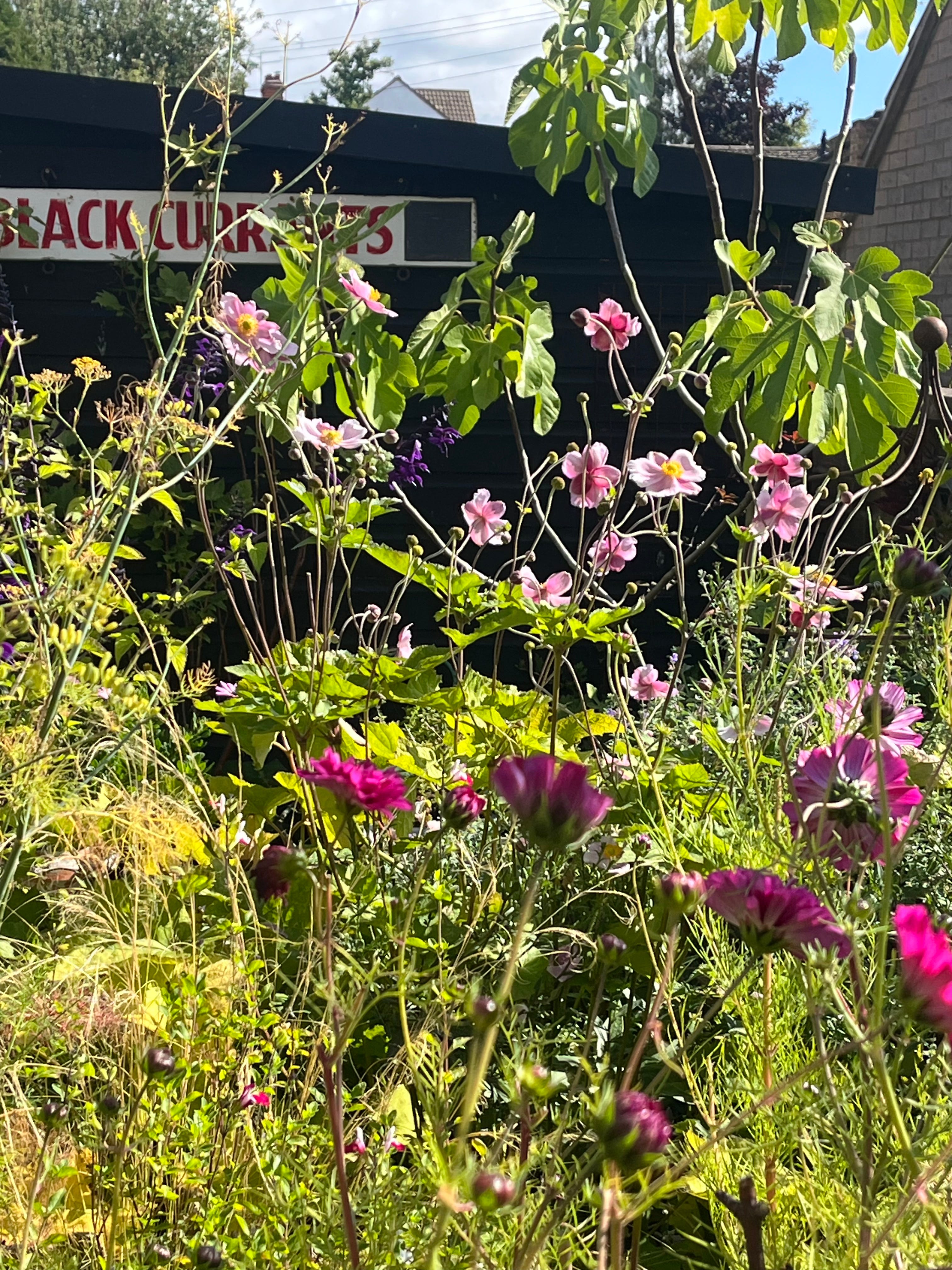
I’ve always maintained that downsizing our house and garden was a relief. That’s true, but it doesn’t mean that it hasn’t been a painful journey at times. I don’t miss the huge lawn in our last home, the deep borders that I never managed to conquer, or the ongoing battle with nettles and brambles from the adjoining field. Honestly, though, I didn’t think that we would have to go quite as small when we swapped village life for a livelier market town. Our plot, 12 x 5.5m, is tight, given that it has to contain a large shed (no garage here) for bikes and boxes containing the last remnants of our former life. Before we moved here six years ago, I gave away or sold huge amounts of furniture and ‘things.’ I’d been a collector, a scourer of country auctions, boot sales and antiques fairs for 25 years, and there was a lot. I had to be ruthless, and there is very little I regret letting ago, apart from an amazing old Victorian wirework plant stand that I foolishly sold in a panic for £75. It took a year and a storage unit to tackle the rest of our possessions after we moved, and a major readjustment when it came to making a garden.
‘Living with it’ is always given as advice for settling into a new space. Which is very sensible, but there was no ‘it’ to live with. We had a bleak little rectangle of concrete pavers, and a side return containing a peach coloured rose and a fern. Even they vanished as our kitchen extension went up. Making the new garden was driven by my desire for a fast, fulsome look, achieved using only containers and raised beds.
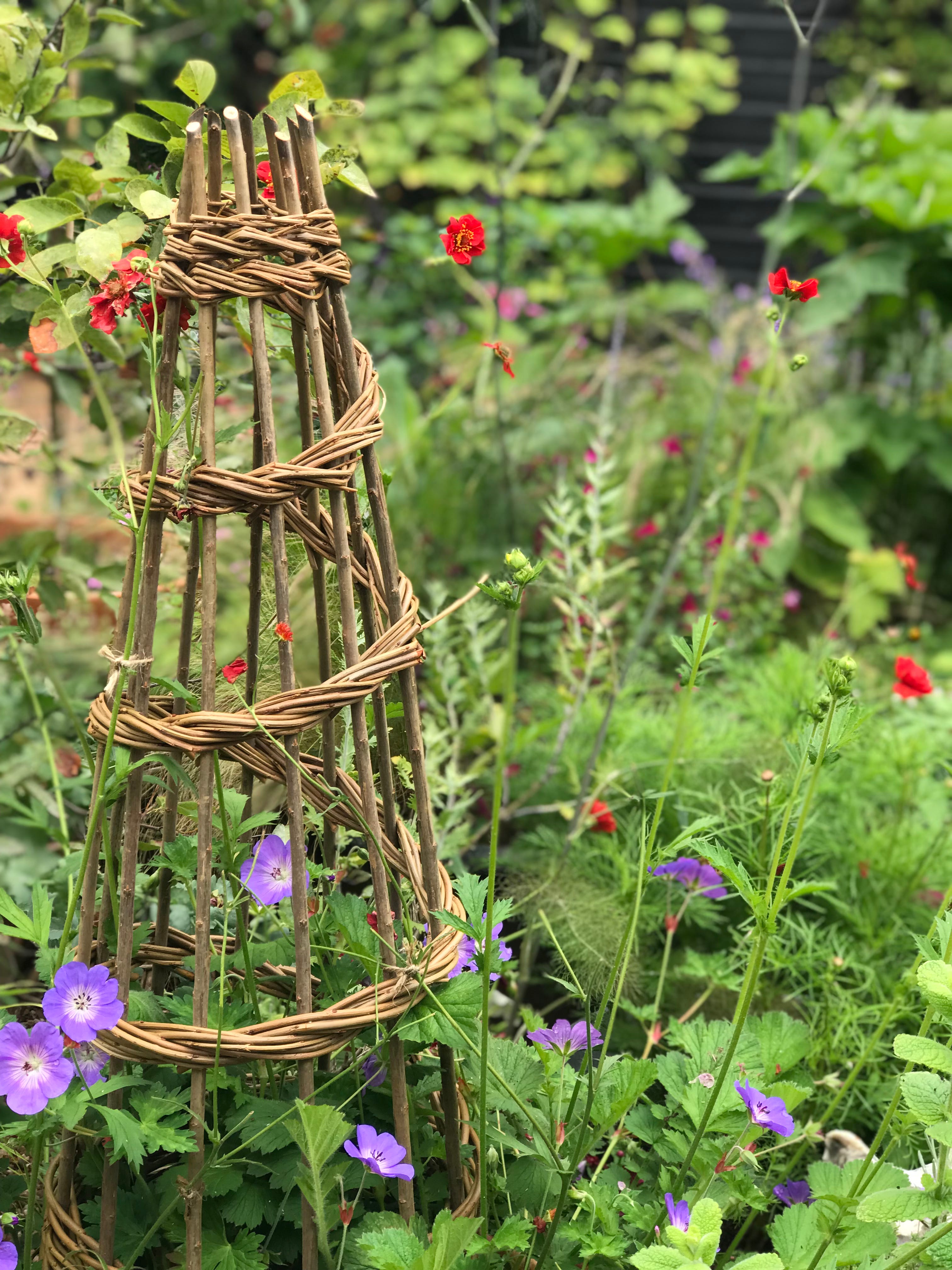
Layering, underplanting, and co-planting was the key. I didn’t want anything restrained or sophisticated. For me, less is not more. More is more. It’s the same inside the house. I can admire those beige, elegant interiors full of natural linen sofas with pots of olive trees and hydrangea ‘Annabelle’ on pale patios, but that’s not how I live. Stepping into a White Company shop makes me want to overturn the counters, lob the scented candles across the room and daub the walls with primary colours. It may sound dramatic, but colour is life and I couldn’t be without it.
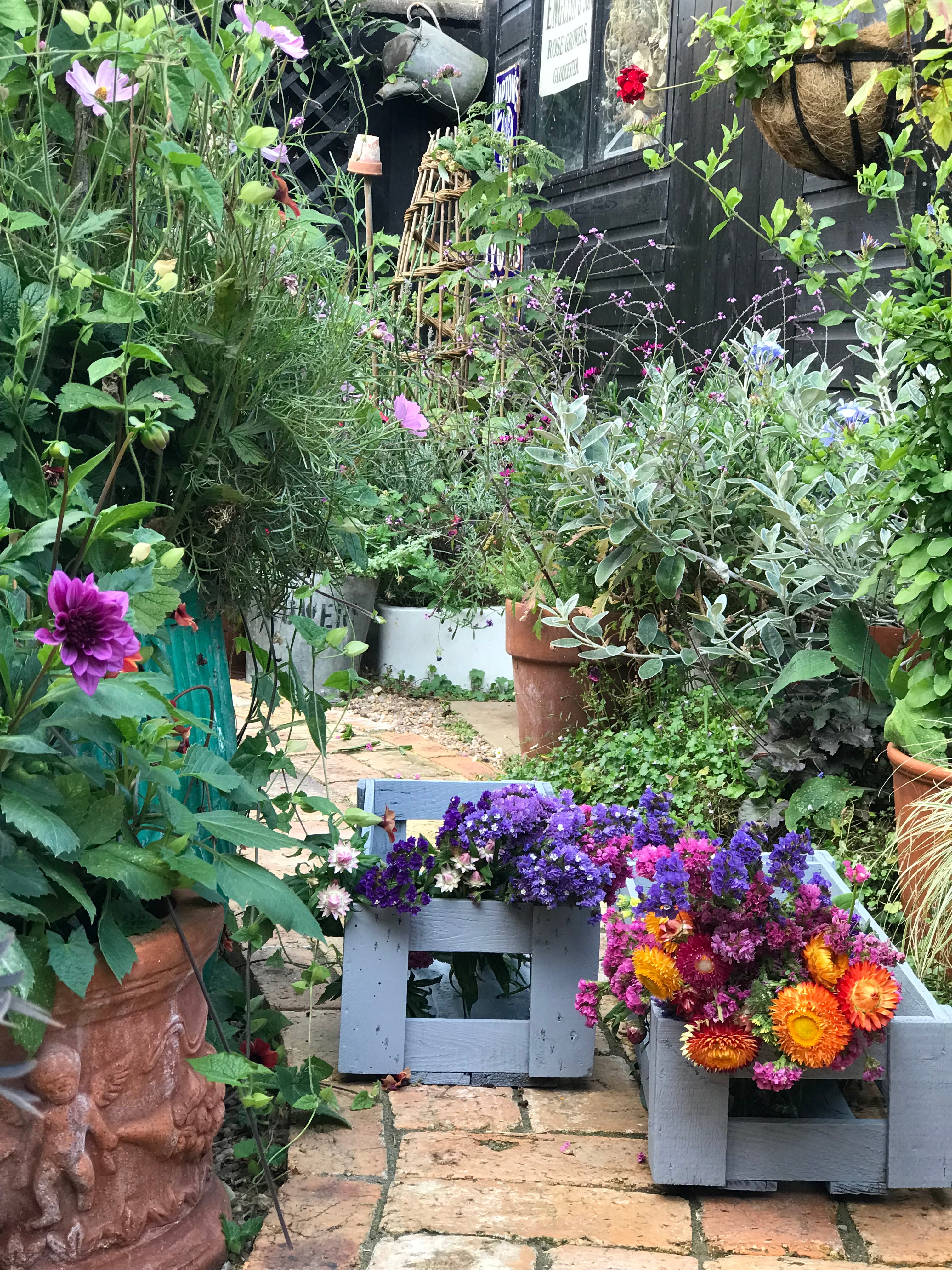
Where possible, I use very large pots or raised beds, and pack them full. And I do mean really full. Bursting. This means composting, feeding, mulching and watering regularly, so it’s definitely not a low maintenance option. On the other hand, with such a small area, I have time to nurture and pamper my plants.
One of my favourite pot combinations is the one pictured below. I’ve had variations on the same theme for three years now. It’s a dolly tub, with three main components.
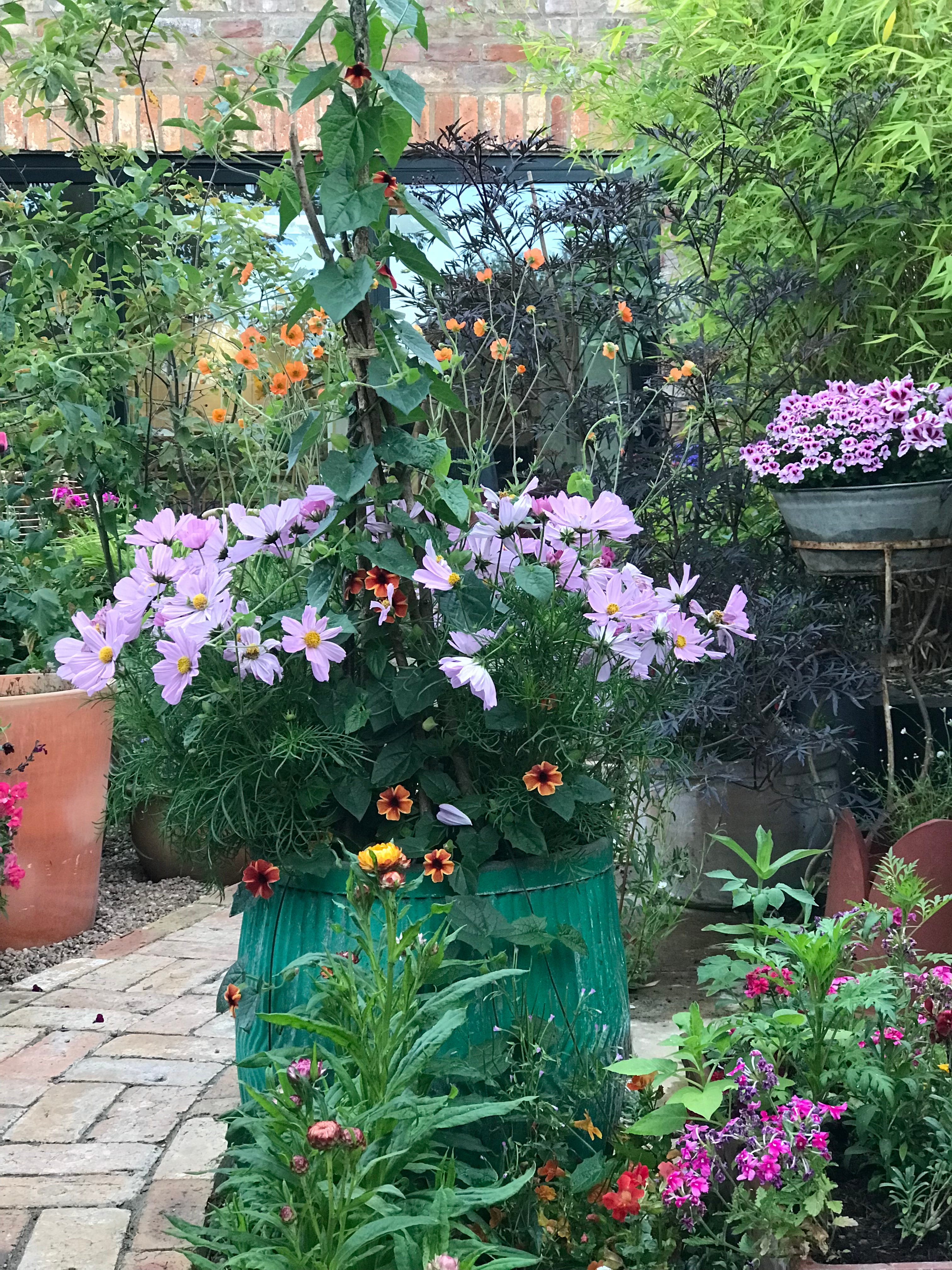
The geum is perennial and stays put, and I plant cosmos (usually raised from seed) and a thunbergia in the centre (this is bought as a young plant as I have trouble raising sturdy climbers from seed in my limited space; they are very puny). The thunbergia will grow as tall as the sticks that I manage to find. Usually, it stretches out sideways, too, running over the greenhouse, and I even found a strand marching over the patio last summer. I treat it as an annual, and it’s my top recommendation for maximum coverage in one season.
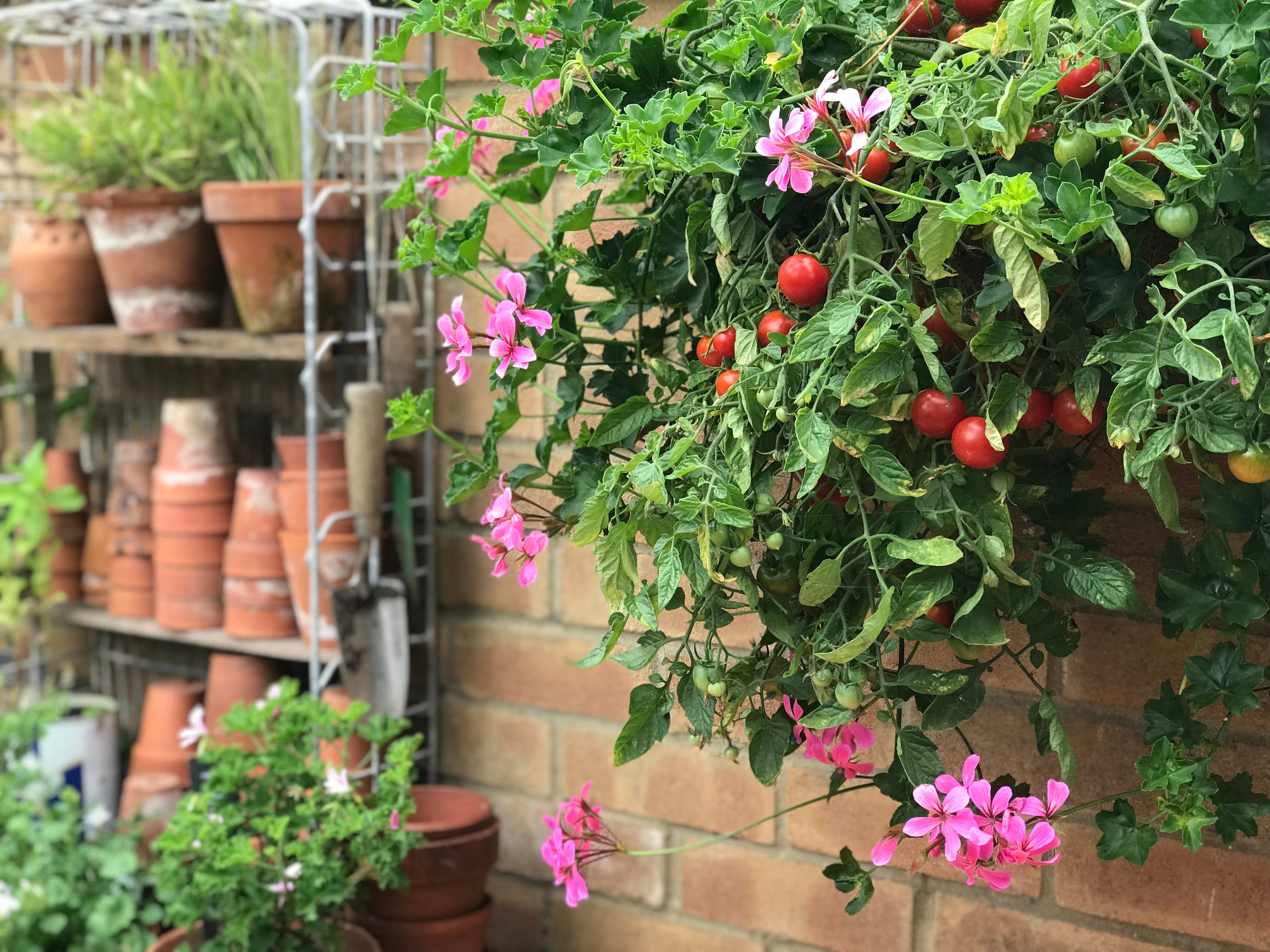
Another excellent combination: ‘Tumbling Toms’ paired with a trailing pelargonium. Again, these are one season wonders, but who cares when they look this good! I bought a very deep wall planter for this pairing, and crammed it with compost, mixing in a good helping of my homemade with shop bought peat-free. Once the tomatoes are formed, I feed weekly with Tomorite, which benefits both the pellies and the edible crop.
The perennials that work well for me are salvias, which I co-plant with osteospermum, hardy geraniums (‘Rozanne’ being a favourite), nepeta, asters, and a selection of ornamental grasses. Any gaps in these perennial pots can be filled in summer with some lovely bedding or annuals. Diascia, calibrachoa and verbena come in beautiful colours - bright, without being brash (if you choose carefully).
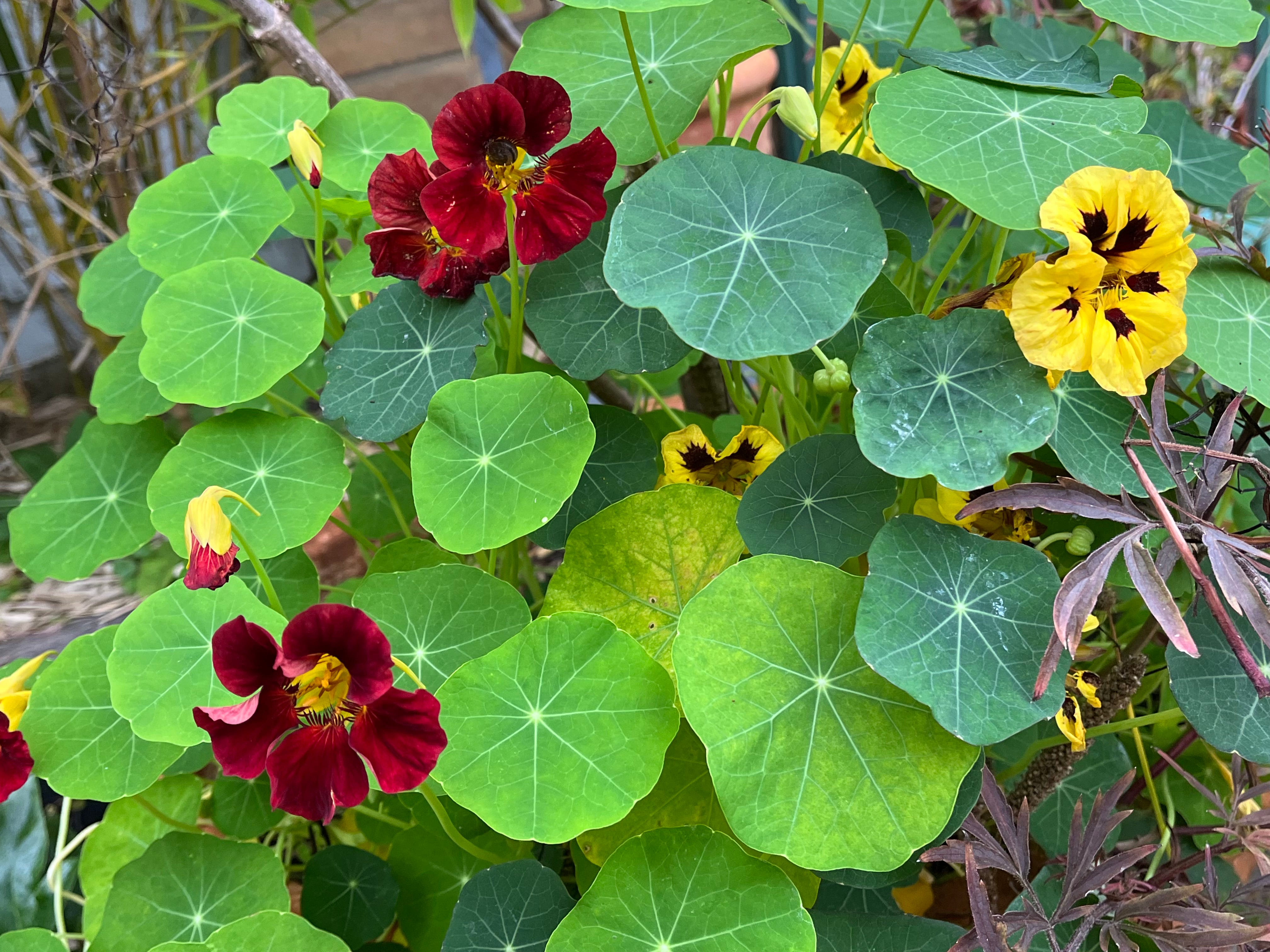
I underplant small trees in pots with caution. I feel that trees would really prefer to be in the ground, and adding extra competition for the small amount of soil they have in my container garden seems unfair. However, I did scatter some nasturtium seeds under the Sambucus nigra this year, and that gave a lovely late summer display. I’ve also put some saxifrage below the Malus ‘Red Sentinel,’ but my amelanchier tree is definitely looking a bit stressed as it grows, so I’m going to leave the base of that one bare and weed-free for now.
Future plans include more veggies in containers for the potager vibes that I crave. I’ve grown French beans before and will do that again (especially the purple ones, ‘Trionfo Violette’ or ‘Carminat’ - I love how they look and taste). A courgette - ‘Burpee’s Golden’ is a good one, tasty and beautiful. And I’d love another go at beetroot. I did manage to raise some small ones in a plastic trug last year, but the dry summer almost did for them. I have a feeling that some of these crops will need to be pushed out into our parking bay at the back of the house, unless my youngest son’s car is still parked there by the time growing season arrives. He’s living with us again while applying for jobs, so we’ll see about that. All I can say is that he’s lucky not to have found seedlings on the back seat before now!
In My Wheelbarrow this Week
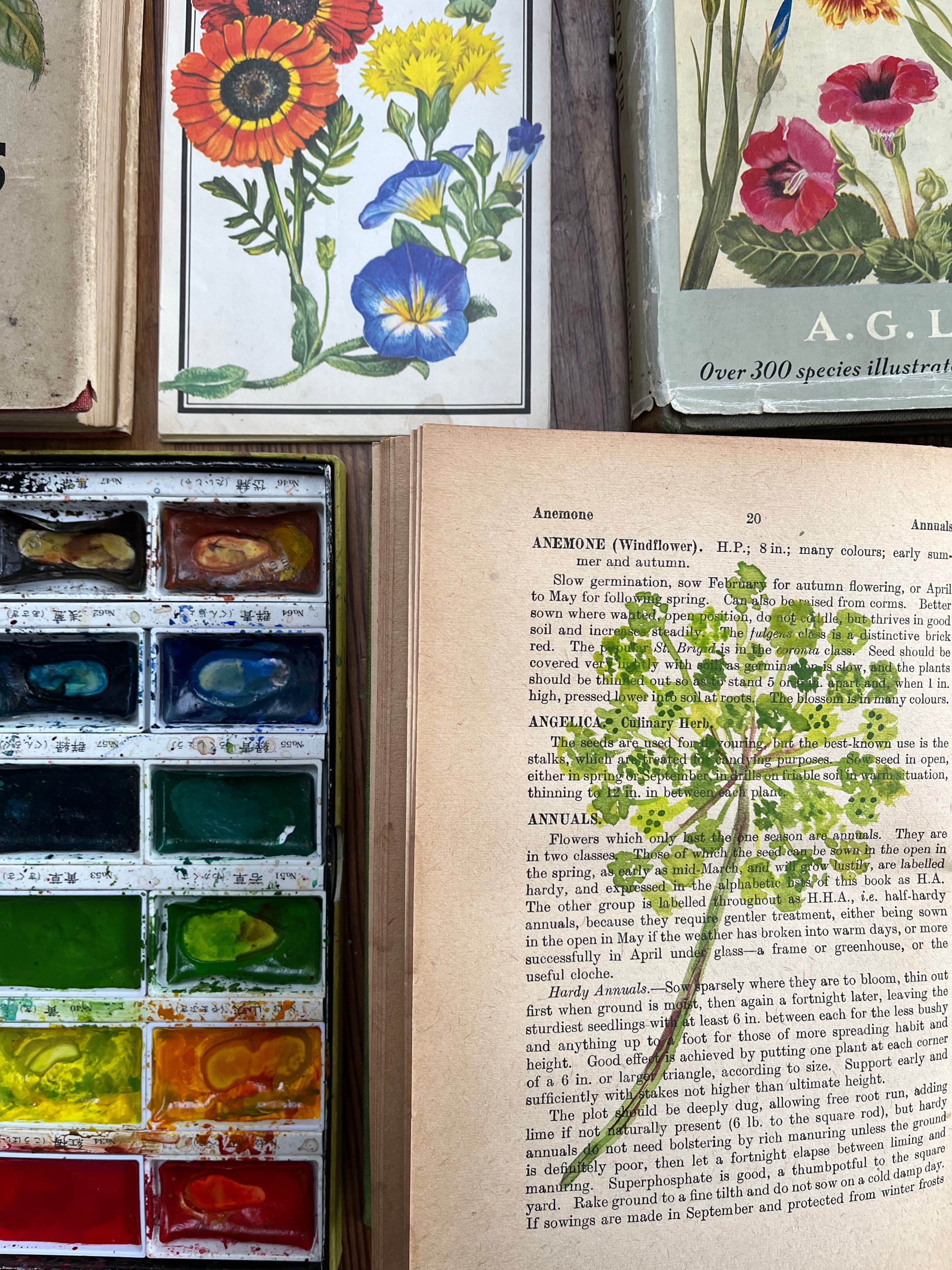
I’ve discovered a series of lunch time and evening online lectures hosted by the RHS Lindley Library. The library, at the London HQ of the RHS, holds a collection of 100,000 rare and modern books about horticulture and botanical art. Painted Leaves: Hidden History of a Library Treasure took one of these books, an 1807 copy of A Dictionary of Practical Gardening, and revealed the work of an artist, Sophia Mackenzie, who had painted into the pages with great skill. The detective work to trace her identity, and the social context of her painting was revealed by the rare books curator. After watching, I felt so inspired, and I delved into my own (not inconsiderable) collection of vintage gardening books, and found a suitable candidate for customising. My efforts are way below the standards of Sophia’s exquisite work, but it has been a wonderful pastime for dark evenings. The pages of old books hold watercolours surprisingly well! For details of forthcoming lectures (the next one is 10 Women Who Shaped the World of Gardening on February 11) , visit the RHS website RHS Lindley Library They are free or cost just a few pounds. An absolute joy.

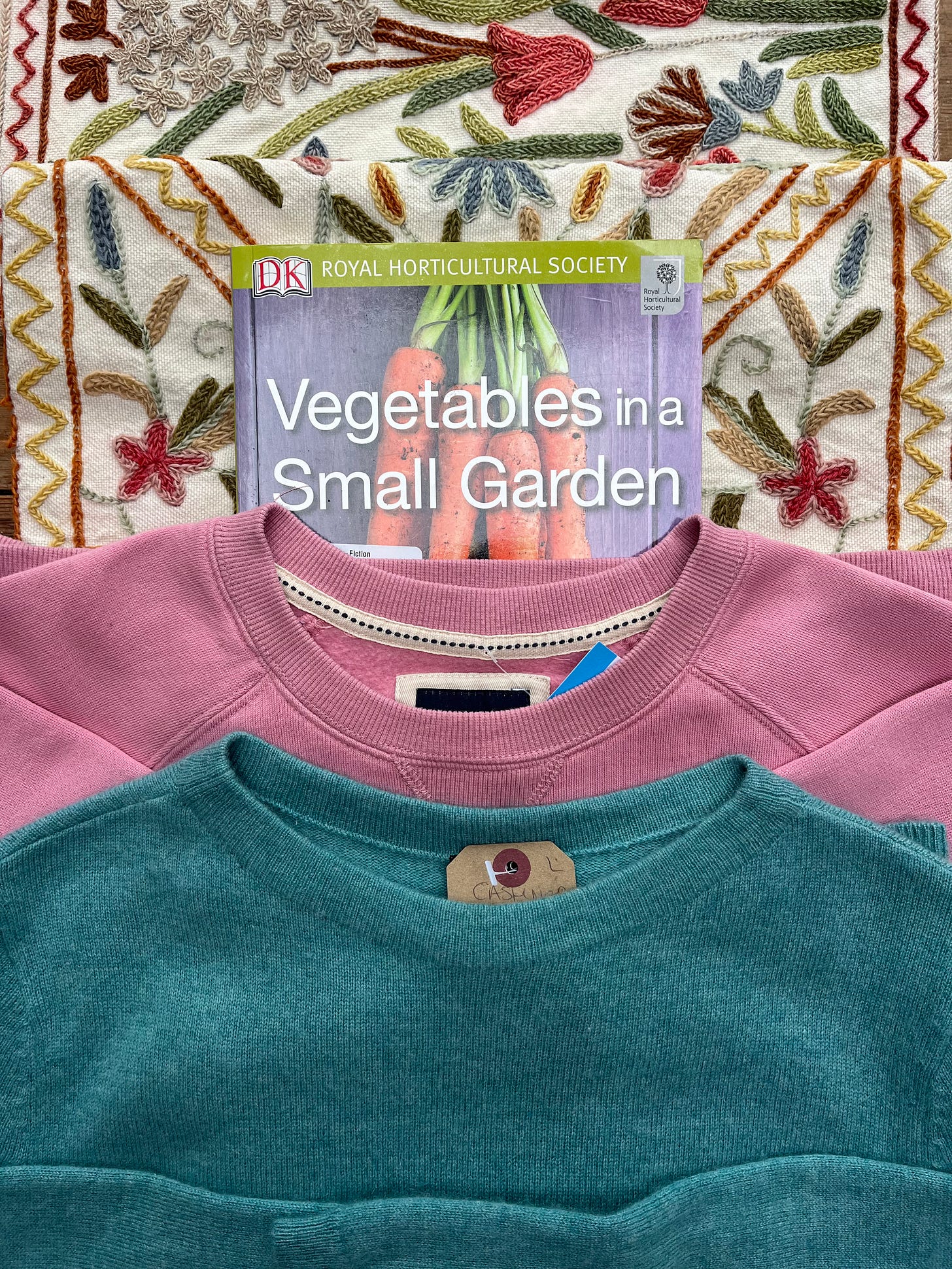
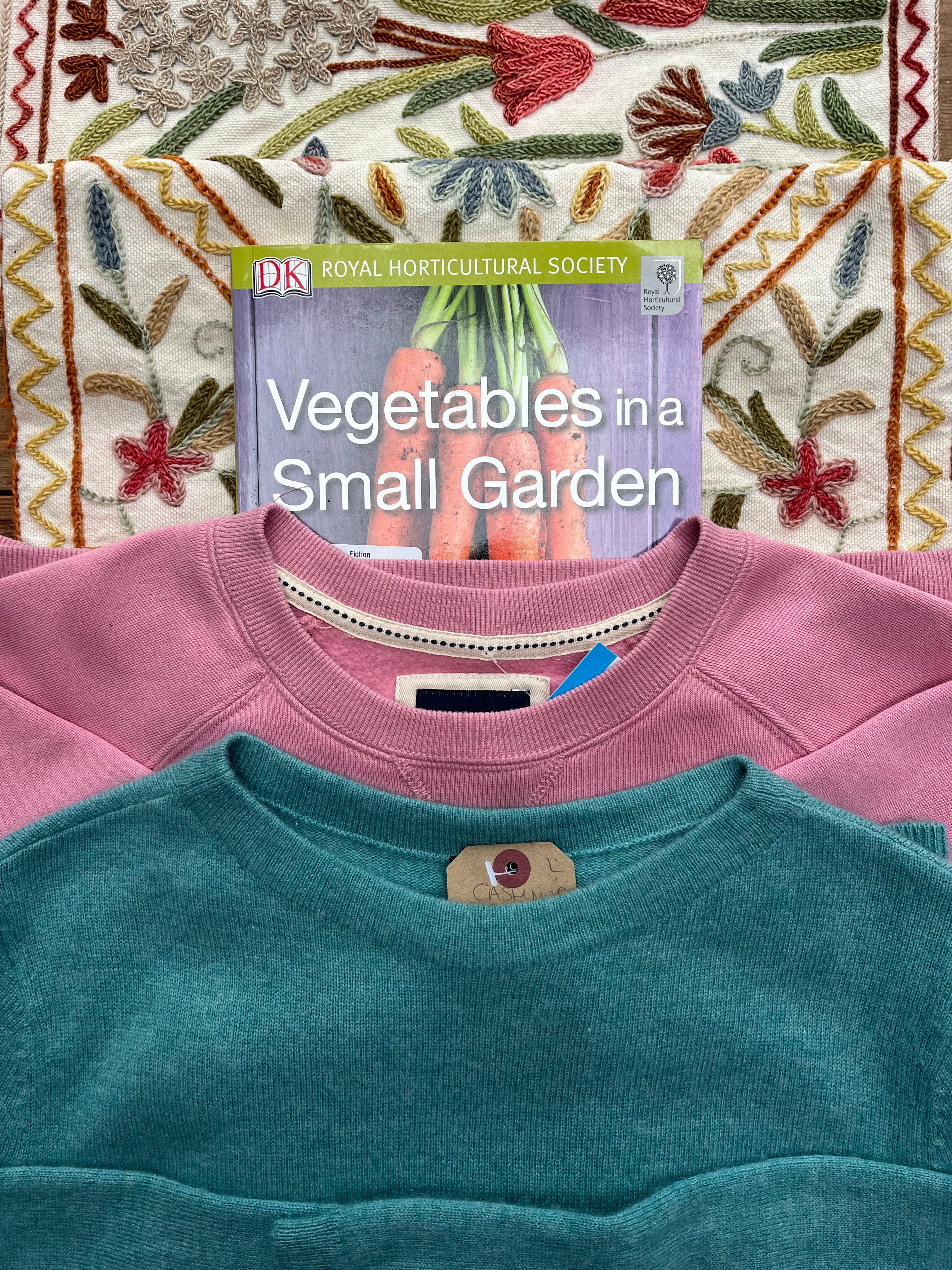
Although I enjoy dipping into tasteful interiors Substacks, they invariably feature tempting items with price tags far beyond my means. Winter charity shop sprees are more my style (and budget). Today I found a turquoise cashmere jumper, two crewel work cushion covers in jewel colours, an excellent gardening book and a perfectly faded pink sweatshirt. Total cost: £25.
The incessant rain has made me crave hot, homemade soup. No 1 in our house is currently celeriac and Bramley apple with toasted walnuts and blue cheese. Sauté chopped up celeriac with an onion and a Bramley apple. Add the best stock you have, simmer, blend and strain. Scatter toasted walnuts and blue cheese nuggets on top.

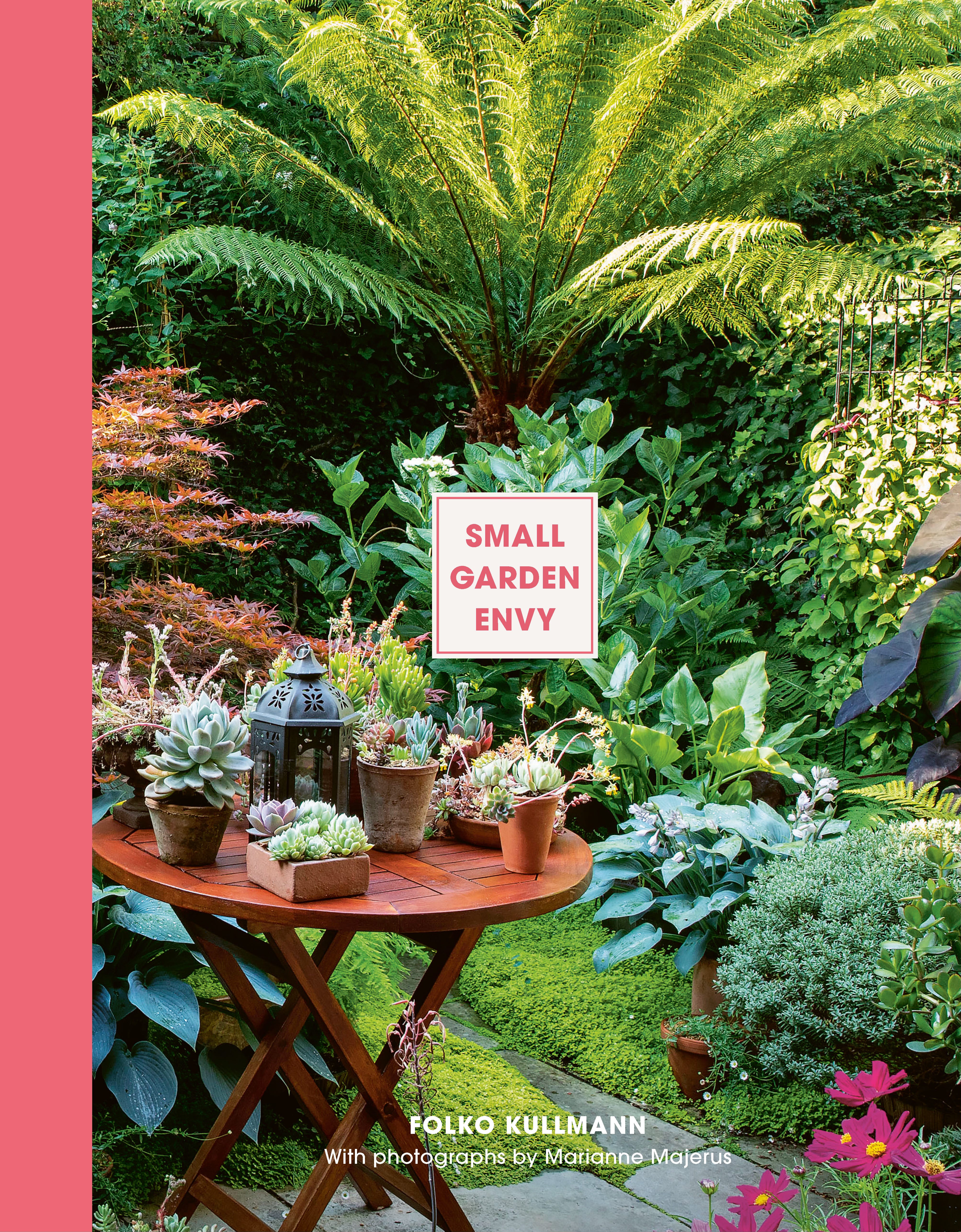
‘Tis the season for the spring gardening book bonanza. I am collecting some together, and will review in my next Substack, but here’s one I like, with photos by Marianne Majerus.


What a wonderful substack find you are! A woman after my own heart. I too am of the more is more school of gardening 🙂 your small space is full if wonders. Thank you for sharing it with us. I'm definitely going to try the tom thumb/ pelargonium combo this year
Gosh, those cushion covers are lovely! I also enjoy thrift shopping.